Showing posts with label Chlorophyll. Show all posts

Wednesday, October 9, 2013

Where Have You Bean All My Life?


If you're like me, when you think of greens, beans aren't the first things that pop into your mind. But I'm about to change that!

While all other beans are allowed to mature before being dried, green beans, also called string beans, are picked while still young and tender, when the inner beans have just begun to form. That's what makes them edible raw or slightly cooked, pods and all.  Green beans have recently been shown to have very strong anti-oxidant capacity. We can see the presence of highly concentrated chlorophyll in the beautiful, bright green color of string beans, but what we can't see is the other good stuff  - lutein, beta-carotene, vilaxanthin and neoxanthin. These are nutrients we normally associate with red and orange produce like carrots and tomatoes. Like I always say, don't judge a book by its cover.

Sadly, we are used to seeing this gorgeously green plant overcooked to a dull khaki color, with a limp and unappetizing mouth feel. If used at all, green beans are a way to fill space on a plate, and rarely take the spotlight as the stars that they really are! Here's a recipe that I make at least once a week, by popular request. It can be eaten warm, but I think it's best served chilled. I make a big batch and put it in the refrigerator for a quick snack or a scrumptious side dish. It sure beats the heck out of potato chips, both for flavor and nutrition. 

Out of This World Green Beans
(with raw option)

1/2 lb fresh green beans, washed
3 cloves fresh garlic
3 Tablespoons raw sesame seeds
chili paste to taste
3 Tablespoons sesame oil
Sea salt to taste

Bring a pot of water to boil. Add the green beans and blanche until bright green. This should take no more than 3-5 minutes. We want to bring out the color and the crunch in the beans, so be careful not to overcook. Drain and set aside.

If you choose to make a raw recipe, skip the above step and, instead, carefully wash the green beans. Set aside.

Grind the sesame seeds with a mortar and pestle. You can find these anywhere, ranging in price from under $10 to over $100. No need to get fancy, just get one that you like and that fits your budget. You don't need to crush all the seeds, just a lot of them. So it will resemble a coarse powder with some seeds still intact. Empty this into a big bowl. Add garlic to the mortar and top with some sea salt. The salt helps break down the consistency of the garlic, as well as adding flavor to the dish. Grind the garlic with the pestle until it becomes a paste. Add the garlic to the sesame in the bowl. Top it off with your choice of chili paste and the sesame oil and mix well. Transfer the drained green beans to the bowl and carefully work it around with a large wooden spoon to coat the beans with the sesame mixture.

And you're done! The next time you're craving a savory snack, this delicious and nutritious snack will be as close as your refrigerator.

For more variety, try this recipe with asparagus or broccoli!

Wednesday, April 10, 2013

Scrumptious Salad with Quinoa, Beets and Walnuts


We love quinoa at our house! And, we’re not alone. The United Nations has declared 2013 the International Year of Quinoa, bringing the spotlight to a food that has recently become very popular.

For thousands of years, quinoa has been an important staple in Andean cultures, and now the rest of the world is getting on board with this little wonder food. Though it can be used in place of grains, quinoa itself is technically not a grain. It has a very high complete protein content, as well as being a good source of calcium, making it a perfect food for vegetarians and vegans. Quinoa is a good source of dietary fiber and phosphorus, as well as being high in magnesium and iron. And on top of all this goodness, it is gluten-free and easy to digest. What’s not to love?

Well, there is one thing – saponins. In its natural state, quinoa has a coating of bitter-tasting saponins that protect it from predators. Good news for quinoa, bad news for people who don’t like bitter tasting food. Not to worry, though. Most commercially sold quinoa has been washed to remove this coating, so the only thing to do before cooking it is to rinse it briefly with fresh water.

I make Scrumptious Salad (we named it that because, well, it’s scrumptious) about once a week. It’s a quick, filling meal that keeps well in the refrigerator for a couple of days. This is a vegan dish, but if you eat dairy, you can toss in some crumbled blue cheese for an added tangy flavor.

Tuesday, March 26, 2013

World’s Easiest Snack Recipe


I’m not joking with that blog title. This really is as easy as it gets, folks. Plus, this particular snack has been proven to have exceptional anti-inflammatory and anti-oxidant benefits. 

So, it’s easy to make, delicious and good for you, too? What’s the catch? Well, there is a small one. The nutritional benefits seem to degrade after about 5-7 days of refrigeration, so you have to eat these babies pretty darned fast. Which, really, if you think about it, isn’t hard at all. If anything, you’ll have a hard time NOT eating them. 

You might be saying to yourself, hey, that's just celery! And, you're right. But, storing it in water brings out the flavors  and adds a crunch that can't be beat. Seriously, you've got to try it to believe it. Ok, so here’s the recipe.

        World’s Easiest Snack Recipe

         Fresh organic celery
         Filtered (or spring) water
         Container

Wash and cut the celery, put the pieces into the container and cover with water. Store in the refrigerator and munch on them whenever you want a crunchy snack, or toss them in salads, stuff them with nut butters, let your imagination run wild. Change the water every other day. And that’s it! Didn’t I tell you it was easy?

Tamera

Tuesday, February 26, 2013

Grow Your Own Celery!


One of my favorite places to get helpful health information is the Hippocrates Health Institute, a non profit health institute based in Florida. Their website is chock full of tips on healthy living, nutrition and alternative therapies. Visit them today at http://www.hippocratesinst.org! A big thank you to Hippocrates Health Institute for letting us share this quick tip with you on how to grow celery right in your own back yard.

Hippocrates Health Institute
Facebook
Twitter
YouTube
Info & Reservations 1 888 228 1755


What did the cucumber say to the celery?

A: "Quit stalking me!"

Have you priced organic celery lately? HHI Greenhouse Manager Brian Hetrich shares the perfect solution for you -- grow your own!
 
You know how lots of folks cut off and throw away the base of the celery bunch? Instead, you can put it in the ground and it will grow back! Start by soaking the base in a saucer with about a half inch of water for a few days and then plant it outside. Celery likes fertile well-drained soil, partial shade and frequent watering. You may never have to buy celery again!
Brian Hetrich is responsible for growing all of the living foods at Hippocrates Health Institute in the greenhouse and organic garden. As part of the Life Transformation Program, he teaches classes to guests on gardening, juicing and raising sprouts and wheatgrass. A naturopathic doctor, Brian left his private practice in Maryland to come to Hippocrates in 2012. Visit our website to learn more about the benefits of wheatgrass and living foods. 
About Hippocrates Health Institute
Our philosophy is founded on the belief that a vegan, living, enzyme-rich diet - complimented by exercise, positive thinking and non-invasive therapies -- are integral to optimum health. We believe that good health is every person's birthright, and that a life free of disease and pain is our human legacy. Visithippocratesinst.org to learn more about our programs.

Monday, February 18, 2013

Magic Beans!

Lima Bean Plant Growing Up and Out 
 Part of the joy of having children is experiencing life through their eyes. Things I take for granted are transformed into exciting adventures simply because they are brand new for my kids. In some ways, it’s like getting a fresh start in life and I love it.

Last week, Jayden’s class began a new project that had him practically jumping up and down with joy. He got to grow his own lima bean, nurturing it from a dry little kernel to a vibrant green plant. He adores his little lima bean green, and he’s learning all about the root system of the plant by watching it grow in real time.

If you have young children, this is a wonderful and easy project for them. All you need is an old CD case, some dirt, scotch tape, a dry lima bean and water.

Directions:

Friday, January 25, 2013

All the Campbells Had a Farm (E-I-E-I-O)

DAY 1


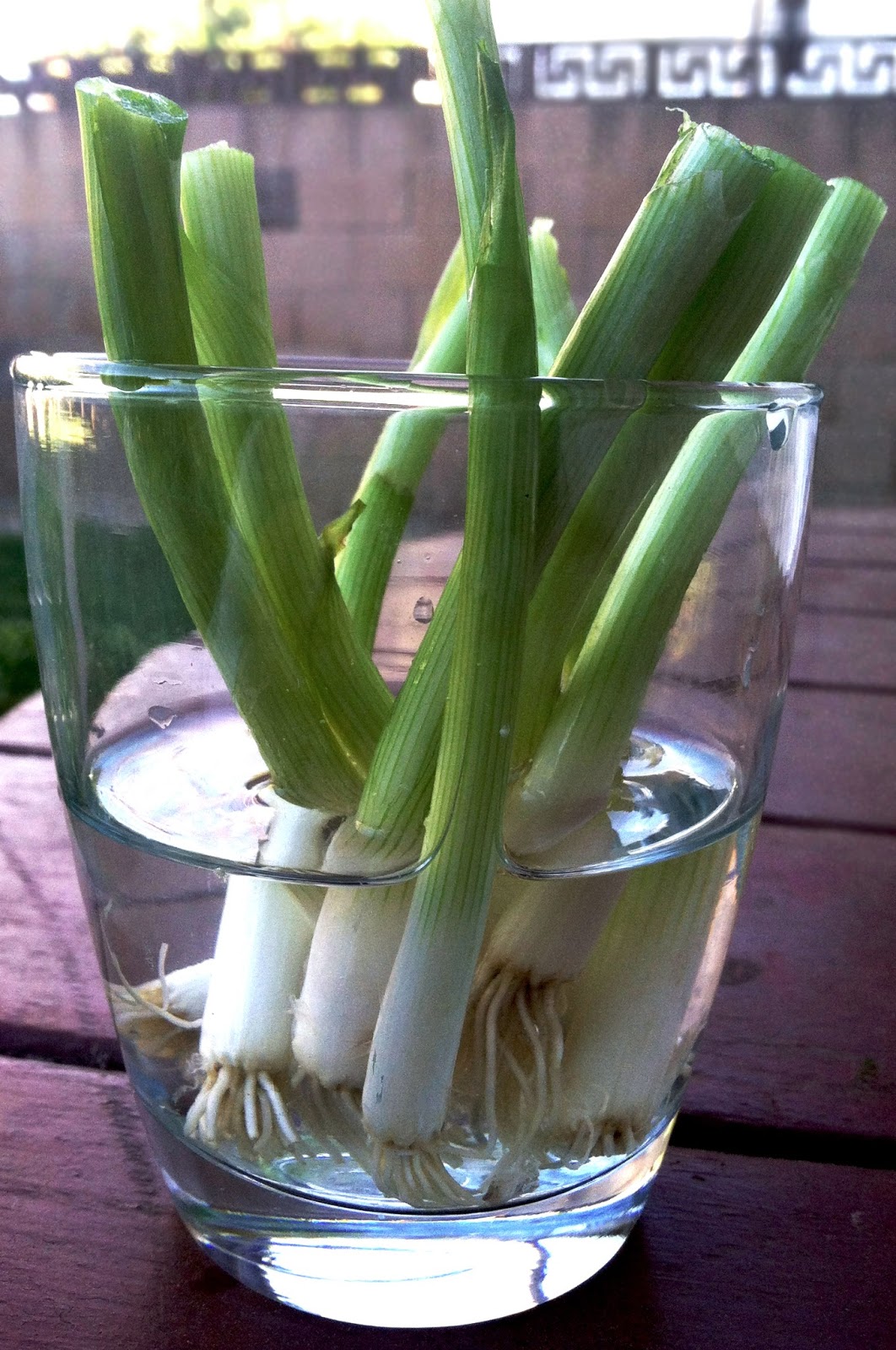
We love to grow things – flowers, veggies, herbs, you name it. Our gardens do need a lot of love and attention, which we are happy to give them. But, sometimes, it’s nice to be able to grow plants that require almost no effort. And, if we can eat the results, then all the better!

DAY 6


Here’s a gardening idea that costs pennies, requires no special equipment and can be done on a windowsill you already have laying around the house. What’s not to love?

It’s a well known fact that green onions are a delicious and nutritious addition to an unlimited variety of dishes. We put them in almost everything – salads, soups, veggie wraps – whatever our imaginations can come up with. Some time back, I learned that we can cut off the green parts of the onions and eat them, and instead of throwing the root parts away, they can be used to grow another batch of onions! I tried it out, and what do you know, it works!

Thursday, November 8, 2012

Almost -Traditional Quinoa Tabouli


Do you love quinoa and the exotic flavors of the Middle East? This new version of a famous traditional dish will become an addiction you won’t need to quit! It’s easy to make and packs a nutritional punch. Whether you eat it as a side dish or an entrée, Almost – Traditional Quinoa Tabouli is about as good for you as you can get. Whip up a large batch, put it in your fridge and enjoy! It keeps for 2-3 days, with the flavors blending and maturing for ever-increased yumminess.

This recipe was given to me by a dear friend, who learned to make Tabouli by watching her Lebanese grandmother turn it out year after year. Traditionally, it is made with cracked wheat bulgur,  which she replaces with quinoa in order to avoid gluten and increase the nutrition factor. With just a handful of easily found ingredients and a few simple steps for preparation, anyone can make it!

Friday, August 3, 2012

The Goldmine in Your Kitchen


You know that old adage that goes, if something sounds too good to be true, it probably is? Most of the time, I totally agree with it. But in this case, we have an exception. 

What if I told you that you could grow your very own fresh food right in your kitchen, and that it would be just about the most nutritious stuff you could put in your body? And that all it would cost would be a few minutes of your time and less money than you’d pay for a cup of coffee?


Seems like a sales pitch? Well, it is. Sort of. I want you to start sprouting sunflower seeds, because once you start, you’ll be hooked. Send no money now. Or ever. Just read on and learn the how’s and why’s of having your own indoor sprout garden.

Tuesday, June 19, 2012

Are you gonna eat that?


Sometimes people tell me that they hate the taste of greens and wheatgrass, or that they find the very rich chlorophyll taste of E3Live hard to take.

And, every time, like clockwork, that old Listerine slogan pops into my head. You know, the one that goes, “The taste you hate, twice a day”? For those of you too young to know what I’m talking about, here’s a then-unknown Morgan Freeman to fill you in.


The idea was that people used Listerine for its benefits, despite its horrid taste.  While the ad campaign was brilliant, I, myself, don’t use Listerine. Why? Because there are much healthier mouth rinse alternatives. But that’s another blog post for another day.

Back to the greens.

Monday, June 11, 2012

Anemic Vegetables


“Eat your veggies!” we are told. And for good reason. A diet rich in fresh vegetables, packed with vitamins, minerals and other phytonutrients  we are still learning about, is one of the best gifts we can give our bodies. Please note that the key word here is fresh.  If I pick a vegetable straight from my own organic-nutrient-rich garden, and eat it right away, my body gets loads of nutrients it can use to replenish my cells, give me energy and fight diseases.  But, the longer I let that vegetable sit around, the less beneficial it will be to me.

Why?